Coconut Oil: Benefits, Limits, and How to Use It
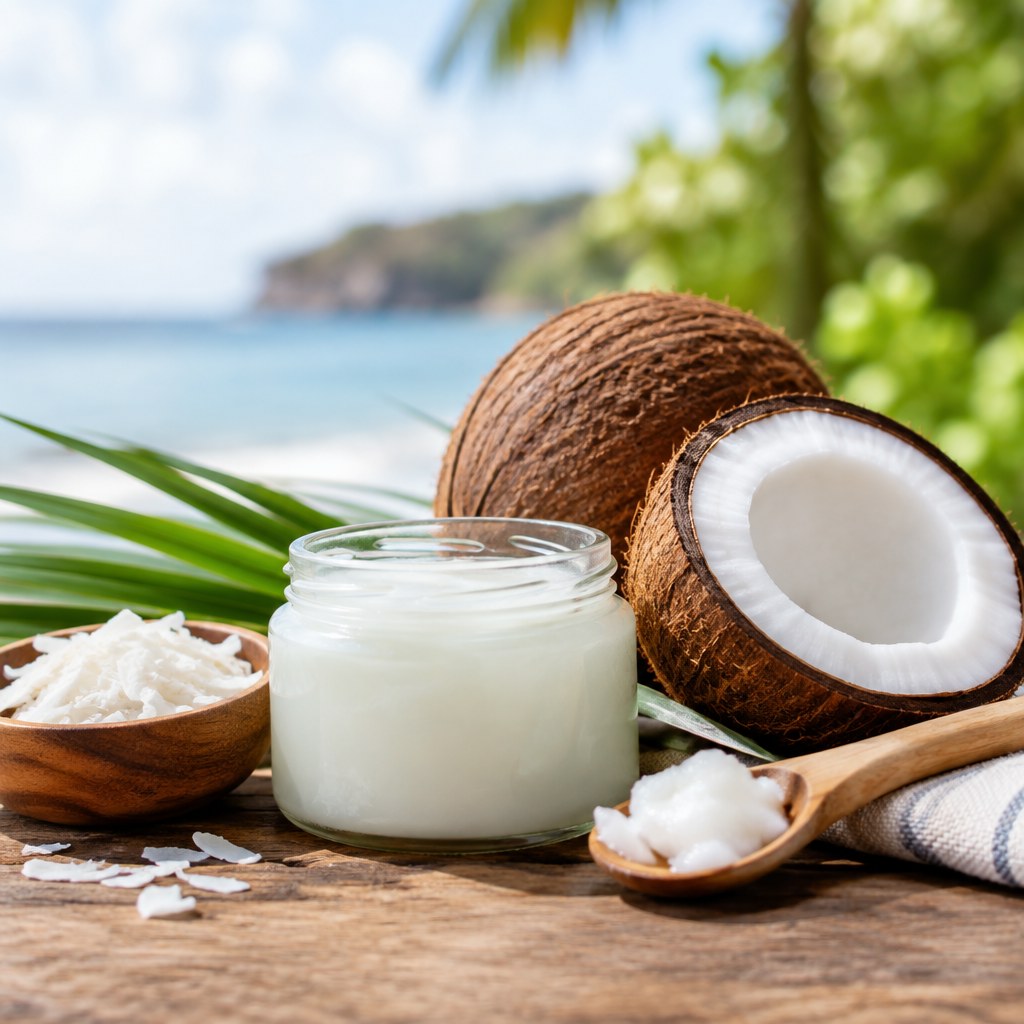
Updated October 1, 2026. Coconut oil can be a useful cooking ingredient and may suit some hair and skin-care routines. Its benefits depend on how it is used. Evidence that an oil reduces hair protein loss, for example, does not mean eating it prevents heart disease or treats Alzheimer’s disease.
The strongest practical case is for selected cosmetic uses. As an everyday dietary fat, coconut oil has a drawback: it contains a high proportion of saturated fat. Adding spoonfuls to your meals is not a proven shortcut to weight loss or better health.
Coconut oil, MCT oil, and coconut foods are different
Coconut oil is the extracted fat. Coconut milk, coconut flesh, and coconut water have different nutritional compositions, so their research and serving sizes are not interchangeable. Virgin and refined coconut oils differ in processing and flavor, but a “virgin” label does not remove saturated fat.
Likewise, ordinary coconut oil is not the same product as a concentrated medium-chain triglyceride, or MCT, oil used in some research and clinical diets. You cannot transfer a finding about a particular MCT preparation to any jar of coconut oil.
Hair: a reasonable conditioning use
A 2003 study comparing coconut, sunflower, and mineral oils found that coconut oil reduced protein loss from damaged and undamaged hair under the conditions tested. This supports its potential as a hair-conditioning ingredient. It does not demonstrate that coconut oil makes follicles produce new hair or treats the causes of hair loss.
If you want to try it, use a small amount on the lengths and ends before washing, then shampoo it out. Start sparingly, especially with fine hair, and adjust according to how your hair feels. There is no need to soak the scalp or leave a heavy layer on overnight.
Stop if it causes irritation or breakouts around the hairline. Sudden shedding, bald patches, scalp pain, or scarring deserves assessment; a grooming oil cannot identify the cause.
Dry skin: possible benefit, with limits
Coconut oil can work as an emollient for some people. In a randomized trial in children with mild to moderate atopic dermatitis, virgin coconut oil was compared with mineral oil, with favorable results for measured skin outcomes. This was a specific eczema study, not proof that coconut oil treats every rash or is best for everyone’s skin.
For a simple cosmetic trial on intact dry skin, apply a small amount to a small area first and stop if it stings, itches, or produces a rash. A plain fragrance-free moisturizer is another option. For a child with eczema, ask their clinician how any new product fits the treatment plan. Do not replace prescribed anti-inflammatory treatment with oil.
Acne and dandruff need different approaches
Claims that lauric acid can affect bacteria in a laboratory do not establish that spreading coconut oil on the face treats acne. Oils and oily hair products can contribute to clogged pores in susceptible people. The American Academy of Dermatology advises checking hair products when breakouts occur along the hairline.
If you are acne-prone, choose skin and hair products labeled non-comedogenic and keep heavy oils away from affected areas. Persistent or painful acne benefits from appropriate acne treatment, not an assumption that more antibacterial activity in a test tube means better skin.
The eczema trial above also cannot be cited as evidence that coconut oil cures dandruff. For recurring flakes and itch, the AAD recommends an appropriate dandruff shampoo, used according to its directions and your hair type. Seek advice if the scalp is very inflamed or the problem does not improve.
Diet: pay attention to saturated fat
The American Heart Association recommends liquid, nontropical plant oils, such as olive or canola oil, in place of fats high in saturated fat. Coconut oil is not a cholesterol-lowering supplement or a preferred oil for preventing heart disease.
What you replace matters. Occasionally using a little coconut oil for a particular flavor is different from adding several spoonfuls to an otherwise unchanged diet. Claims based on the traditional diet of an island population cannot isolate coconut oil from the rest of that population’s diet, activity, and circumstances.
Read the nutrition label and measure the amount used. If you like coconut flavor in a curry or baked dish, use it for that culinary purpose; choose mostly unsaturated oils for routine cooking. Someone managing high LDL cholesterol should discuss their overall eating pattern with their clinician or dietitian.
Weight loss and appetite claims are overstated
Coconut oil adds dietary energy. Evidence about specialized MCT products does not establish that ordinary coconut oil burns abdominal fat. Neither a feeling of fullness after a fatty meal nor a short-term measurement proves meaningful, sustained weight loss.
There is no need to swallow a set number of tablespoons each morning. If a recipe already contains enough fat, adding oil because it is advertised as “metabolism boosting” simply changes the meal. A sustainable approach should consider the whole eating pattern and your individual needs.
It is not a home treatment for neurological disease
Alzheimer’s disease
The idea that ketones might supply brain energy is a research question, not proof that coconut oil prevents or reverses dementia. The Alzheimer’s Association discusses the limitations of alternative-treatment claims. Memory changes warrant assessment and evidence-based care rather than replacing treatment with a supplement.
Epilepsy
A medically prescribed ketogenic diet is a carefully designed treatment for selected people with epilepsy. The Epilepsy Foundation explains that it requires medical and dietitian supervision. It is not equivalent to feeding a child coconut oil. Do not start a restrictive seizure-treatment diet or alter antiseizure medicines without the treating team.
Two more uses to avoid
Oil pulling: the American Dental Association does not recommend oil pulling as a dental hygiene practice because reliable evidence is lacking. It should not replace fluoride toothpaste, cleaning between teeth, or dental care, and it is not a proven whitening method.
Sun protection and fresh burns: coconut oil is not an adequate sunscreen or first aid for a burn. For sunburn, NHS guidance emphasizes cooling the skin and staying out of the sun. Get advice for blistering, significant swelling, or feeling unwell.
Use it for a clear purpose
A small amount for hair conditioning, a tolerated moisturizer on intact skin, or occasional cooking flavor can be reasonable. Choose one purpose, use a modest amount, and stop if problems develop. Promises about curing disease, rapid weight loss, or having no side effects do not reflect the evidence.