Hair Growth and Thickness: Home Care, Evidence and Treatment Options
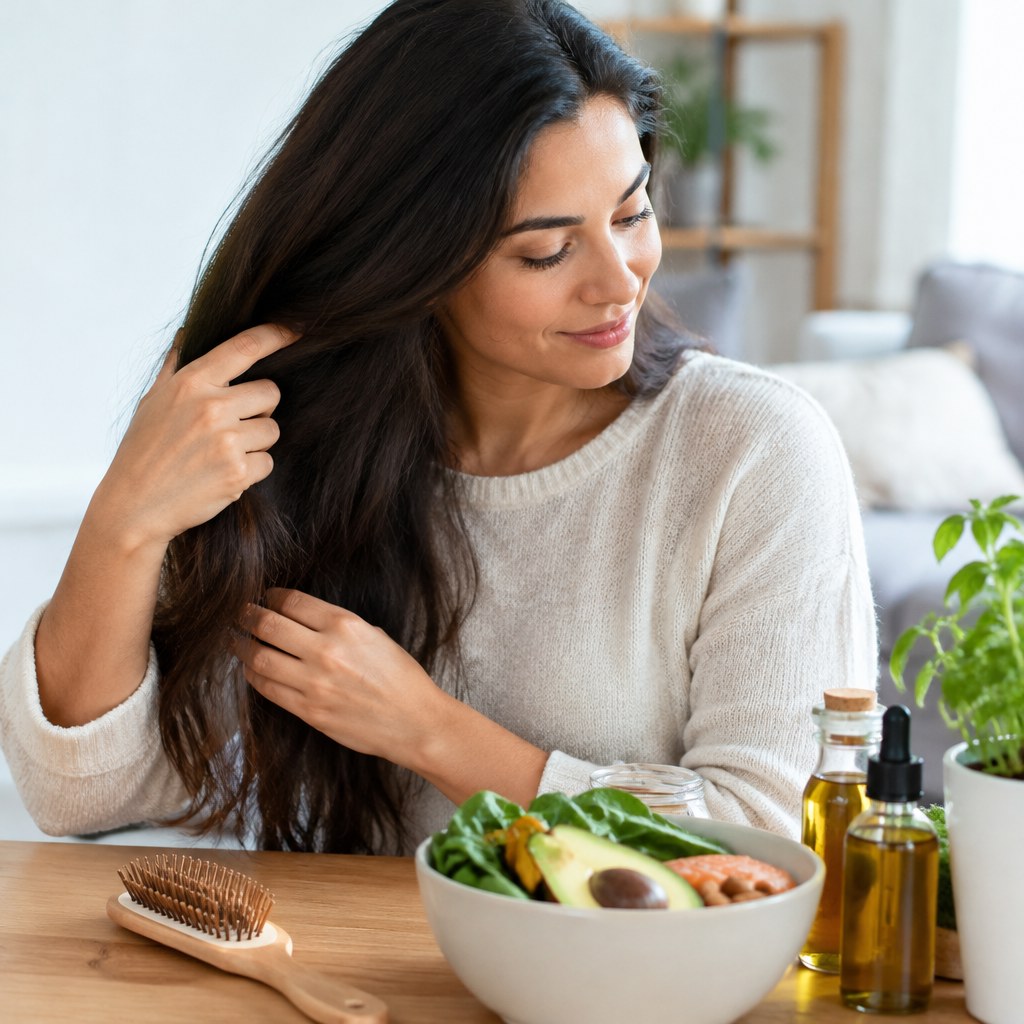
Hair that looks fuller is not always hair that is growing faster. A conditioner can improve the feel of existing strands, a different style can add volume, and gentler handling can reduce breakage. Regrowing hair from a thinning scalp is a separate question, and the right approach depends on the cause.
Home care is useful, but coffee, food masks and plant pastes should not be promised as cures for hair loss. This guide explains what to keep from a simple routine, how to interpret the remedy research and when to ask about treatments with stronger evidence.
Identify the change you are seeing
- Breakage: Strands snap along their length, often leaving uneven short pieces. Styling damage can contribute.
- Shedding: More hairs seem to come out from the scalp. Illness, stress, weight loss and other factors can be involved.
- Gradual thinning: A widening part or receding hairline may reflect pattern hair loss.
- Distinct patches or scalp symptoms: These need assessment; a patch is not automatically the same condition as gradual thinning.
These descriptions are clues, not a home diagnosis. A clinician may ask about timing, medications, health changes and hair practices, examine the scalp and order selected tests if needed. Do not stop a prescribed medicine because you suspect it affects your hair.
What the 12 popular home remedies really offer
1. Coffee and caffeine
The often-cited caffeine study used hair follicles taken from scalp biopsies and grown in a laboratory. It did not test whether drinking one or two cups of coffee daily makes hair grow. A promising laboratory result cannot determine an effective drink, dose or scalp preparation. Choose coffee for enjoyment if it suits you, not as a regrowth prescription.
2. Coconut oil and other oils
A study comparing coconut, sunflower and mineral oil found that coconut oil reduced protein loss from hair fibers under the tested conditions. That is a finding about protecting the hair shaft, not reversing baldness. If you like oil as part of grooming, use a modest amount suited to your hair and stop if it irritates the scalp or leaves troublesome buildup. Overnight oiling is not required by that finding.
For a separate look at claims and precautions, see our guide to essential oils and hair-growth evidence. Concentrated essential oils are not interchangeable with ordinary conditioning oils.
3. Aloe vera
The presence of vitamins in a plant does not prove that rubbing its gel into the scalp prevents hair loss. NCCIH does not establish aloe as a hair-regrowth treatment and notes that topical use can sometimes cause itching, burning or rash. There is no need to cover every part of the scalp with fresh gel to “feed” the roots.
4. Curry leaves
A homemade curry-leaf oil has no established dose or dependable clinical result for regrowing hair. It should not be described as delivering a protein rush to follicles. Avoid heating oils for scalp application: adding a burn risk does not improve the evidence for the remedy.
5. Fenugreek
A seed paste is not a proven way to increase hair density. Studies of an extract or a multi-ingredient product would not automatically validate a kitchen preparation. If your concern is thinning, spending weeks rotating pastes can delay finding its cause.
6. Green tea
Drinking green tea is not an established treatment for hair loss. Research on a particular compound, laboratory model or topical formula does not show that a daily cup will increase length or thickness. Do not increase caffeine intake solely to chase a hair-growth promise.
7. Onion juice
A small 2002 trial compared onion juice with tap water in 38 people with patchy alopecia areata. It reported more regrowth in the onion group, but this was a particular hair-loss condition and a small study. It does not prove that onion juice treats every type of thinning or works better than standard care. A new bald patch deserves diagnosis rather than an hour-long homemade scalp treatment.
8. Hibiscus flowers and leaves
The claim that a hibiscus paste will stop any hair fall is not justified. A botanical ingredient being traditional or pleasant to use does not establish regrowth. Avoid applying mixtures to broken or inflamed skin, and do not use a recipe as a substitute for assessment.
9. Orange puree
Oranges can be part of a varied diet. Their vitamin C content does not show that an acidic puree rubbed onto the scalp increases hair density. Scalp massage with fruit is unnecessary for obtaining nutrients from food.
10. Avocado
Avocado contains dietary fats, but a nutritional benefit from eating it is not proof of a scalp treatment. A mask changing how hair feels temporarily should not be confused with new growth. If dryness is the problem, start with a manageable dry-hair care routine.
11. Egg masks
Hair contains protein, but putting whole eggs on it does not guarantee thicker strands or more follicles. Do not confuse a food mask with a tested hair product. Eggs are one possible dietary protein source; beans, lentils, tofu, dairy, fish and other foods can also fit different eating patterns.
12. Diet and supplements
Adequate nutrition matters, and iron deficiency or significant weight loss can be associated with shedding. But a balanced diet cannot promise to fix every hair-loss condition. Discuss testing when a deficiency is suspected rather than taking high-dose supplements at random.
NIH notes that evidence for biotin supplements improving hair in people without deficiency is limited. High biotin intake can also interfere with laboratory tests. Tell your clinician about any hair, skin and nail supplement, including the dose.
A useful plan for the next month
- Record the starting point. Take a few photos using the same parting, lighting and distance. Note when the change began.
- Simplify care. Use a suitable shampoo and conditioner, detangle gently and reduce repeated heat or chemical processing.
- Remove pulling. Loosen styles that hurt, pull at the edges or repeatedly tension the same area.
- List possible triggers. Include recent illness, dietary restriction, new medicines and scalp symptoms for your appointment.
- Avoid stacking treatments. Several new products at once make irritation and progress harder to interpret.
This plan helps you observe and protect hair; it is not a promise of visible regrowth within a month.
When treatment is worth discussing
Seek advice for rapid or patchy loss, a painful or inflamed scalp, or thinning that worries you. Topical minoxidil can help some forms of pattern hair loss, but it is not right for every cause. Results take months and continued use is generally needed to maintain benefit. Ask a pharmacist or clinician about suitability, side effects and pregnancy or breastfeeding before starting.
Alopecia areata, infection and inflammatory or scarring conditions may require different treatment. The most valuable first step is matching the treatment to the problem, rather than choosing the strongest-sounding natural remedy.
Sources
Information checked on 1 October 2026.
- AAD: Diagnosing and treating hair loss
- NHS: Causes and treatment options
- Fischer and colleagues: Caffeine in cultured hair follicles
- Rele and Mohile: Oils and hair-fiber damage
- Sharquie and Al-Obaidi: Small onion-juice trial in alopecia areata
- NCCIH: Aloe vera evidence and safety
- NIH Office of Dietary Supplements: Biotin
- AAD: Traction-related hair loss