Pimple Care at Home: What Helps Acne and Which Remedies to Avoid
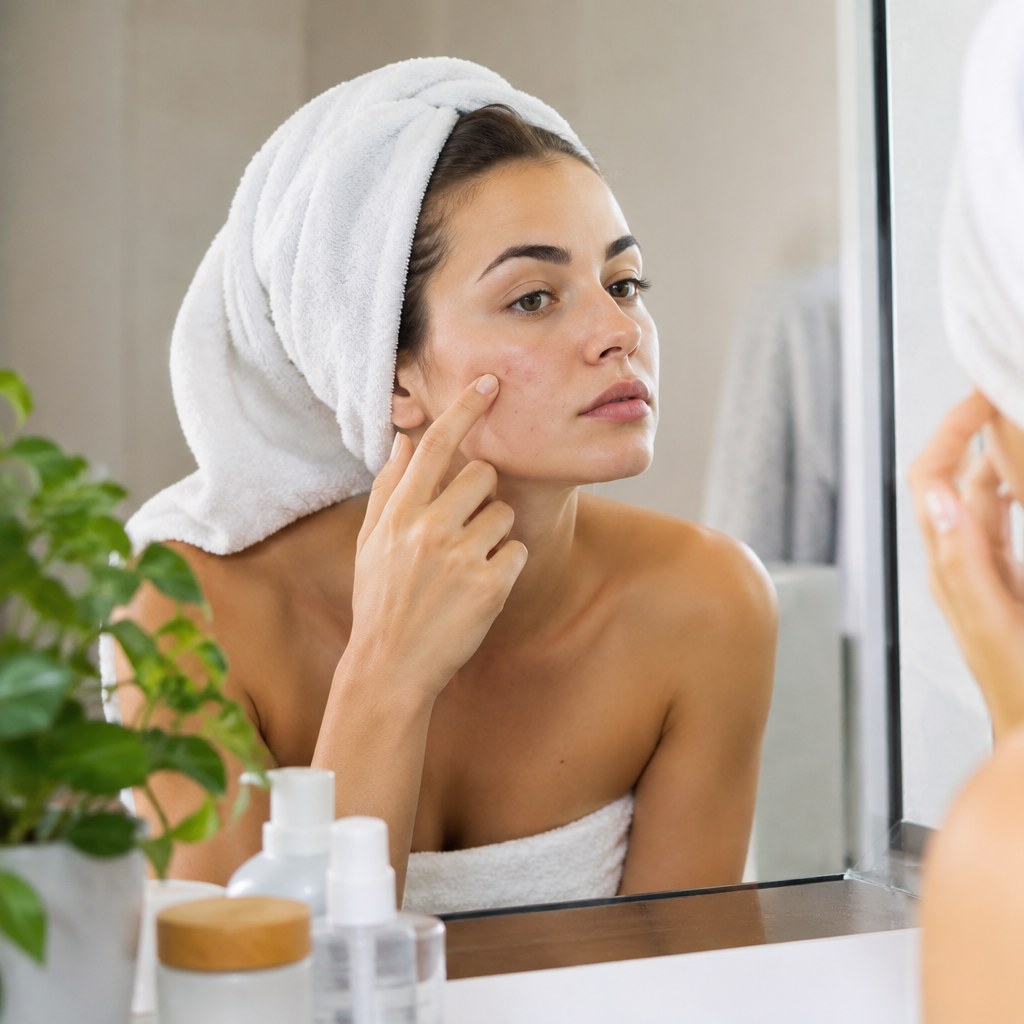
Pimples are common, and they are not evidence that you are dirty or failing to care for yourself. A gentle routine and an appropriate acne treatment can help. Harsh kitchen remedies can add irritation without treating the underlying problem.
There is no dependable overnight cure. This guide explains sensible home care for mild acne and when to get professional help, including for painful spots, scars or distress about your skin.
Updated October 1, 2026.
Begin with a simple routine
The American Academy of Dermatology (AAD) recommends gentle cleansing up to twice daily and after sweating. Apply cleanser with your fingertips, rinse and pat dry. Scrubbing with sugar, rough cloths or brushes can irritate acne-prone skin.
Use a moisturizer that is labeled noncomedogenic or oil-free if your skin feels dry, particularly while using acne treatments. Choose noncomedogenic sunscreen with broad-spectrum SPF 30 or higher. Avoid tanning, and resist picking or squeezing spots because it can increase scarring and dark marks.
Keep a short record of the products you use. A useful starting list is a gentle cleanser, moisturizer, sunscreen and one suitable acne treatment. Adding several new products at once makes it difficult to know what is helping or causing discomfort.
Treatments with better evidence than kitchen recipes
The AAD’s 2024 acne guideline update strongly recommends topical benzoyl peroxide and topical retinoids, among other treatments. It also includes conditional recommendations for salicylic acid and azelaic acid. The choice depends on your acne, skin tolerance, age and other circumstances.
- Benzoyl peroxide: can help inflamed pimples. Ask about starting with a lower strength to limit dryness and irritation. Follow the label and remember it can bleach fabrics.
- Adapalene: a retinoid used for blocked pores and acne. Availability and age restrictions vary. Do not use it during pregnancy; seek advice if planning pregnancy.
- Salicylic acid: may help blackheads and whiteheads, but can irritate sensitive skin.
- Azelaic acid: can be useful for acne and the dark marks that sometimes follow it.
A pharmacist can help you choose a suitable product. During pregnancy or breastfeeding, check treatment choices with your clinician; the AAD has specific pregnancy guidance. More treatment is not automatically better, and prescriptions should be used as directed.
Give a treatment a fair trial
The AAD’s adult acne advice recommends allowing six to eight weeks for a new product before adding another, unless it causes a reaction or your clinician advises otherwise. Improvement can take several weeks, with fuller clearing taking longer.
Apply medication according to the instructions, including whether it belongs over the affected area rather than only on visible spots. Do not double the amount after a missed application. Stop and seek advice for significant irritation, swelling or a suspected allergic reaction. Breathing difficulty or swelling of the lips or tongue needs emergency help.
Popular home remedies, reconsidered
Toothpaste: keep it off your skin
The AAD explicitly advises against toothpaste for acne. Its ingredients can irritate or damage skin; a cooling sensation is not proof of an acne benefit. It is not recommended here for burns either. Use products designed for the condition you are treating.
Garlic: a real burn risk
Do not rub raw garlic on pimples. A published case report describes facial burns from a garlic acne mask, and other clinical reports document similar injuries. Antimicrobial activity in a laboratory does not make a food safe to apply to inflamed skin.
Apple cider vinegar: dilution is not a safety guarantee
Poison Control warns that vinegar can cause skin injury. A homemade vinegar-and-water mixture is not equivalent to a formulated acne product. Leave vinegar out of your skin-care routine rather than experimenting with contact times.
Sugar scrubs: acne does not need abrasive cleaning
Rubbing harder cannot scrub away the processes causing acne. If your face feels tight, raw or stingy after a scrub, that is a reason to stop. A gentle cleanser and appropriate treatment are more useful than repeatedly trying to remove every bit of oil.
Tea tree oil: limited evidence, possible reactions
NCCIH reports that a small amount of research suggests benefit for acne, but more evidence is needed. Tea tree products can irritate skin and the oil must not be swallowed. A few drops in water should not be treated as a reliably formulated treatment, and essential oil should not be applied neat.
Green tea, aloe, honey and coconut oil
Research on an ingredient or a specially prepared product does not establish that cooled tea, fresh plant pulp, kitchen honey or an oil massage will clear acne. NCCIH notes that small aloe studies used it alongside other treatments, and aloe can sometimes cause a rash or burning.
The AAD guideline found insufficient evidence to make recommendations for alternative therapies such as plant-based products. These ingredients should not be described as cures, reliable skin-lightening treatments or substitutes for an acne plan. A product you tolerate may have a cosmetic role without treating pimples.
Ice and extra water
A briefly applied cool compress may feel soothing, but it does not prevent the next breakout. Do not hold ice directly against the skin. Drinking water supports ordinary hydration; it does not “flush out” acne, and drinking as much as possible is not a safe or useful treatment goal.
Should you cut out dairy or oily food?
The AAD’s diet discussion describes possible links between acne, high-glycemic diets and cow’s milk, while emphasizing uncertainty. An association does not prove that a particular food causes your acne, and removing dairy is not a universal treatment.
If you suspect a pattern, keep a food and symptom record to discuss with a clinician or dietitian. Avoid restrictive diets, especially for children and teenagers. Replacing milk with a few vegetables does not automatically replace all of its nutrients. Skin care and appropriate medication can still be necessary even when dietary changes seem helpful.
When to seek help
Arrange a medical assessment for deep painful lumps, developing scars, persistent acne despite a consistent routine, or acne that affects your confidence or mental health. You do not have to wait until it is severe enough to justify feeling upset. A clinician can also check whether an acne-like rash is actually another condition.
For shine without many spots, see our guide to caring for oily skin. Whatever your skin type, a sustainable routine is more valuable than a succession of increasingly harsh remedies.