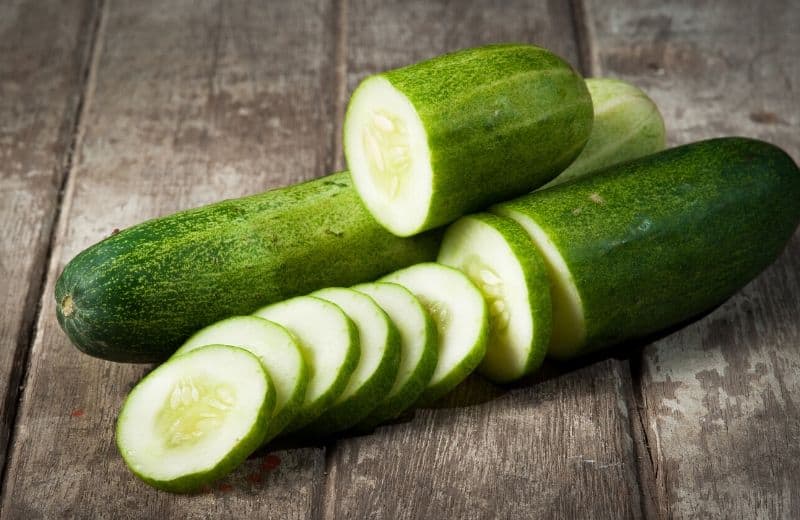
Cucumber is crisp, mild, inexpensive and mostly water. That makes it useful in salads, sandwiches and snacks, but it does not make cucumber a treatment for diabetes, cancer, constipation or skin conditions. Its real value is simpler: it adds fluid, a little fibre and several micronutrients to meals without many calories.
This guide explains what cucumber provides, what the evidence can and cannot support, and how to buy, store and prepare it safely.

Is cucumber a fruit or a vegetable?
Botanically, cucumber is a fruit because it develops from a flower and contains seeds. In cooking, it is normally treated as a vegetable because it has a savoury flavour. Both descriptions can be correct; the difference is simply botanical versus culinary classification.
Cucumber nutrition at a glance
Raw cucumber with the peel is about 95% water. A cup of sliced cucumber is low in energy and provides small amounts of fibre, vitamin K, vitamin C, potassium and magnesium. The exact numbers vary with variety, serving size and whether the peel is removed, so use the USDA FoodData Central cucumber entries when you need detailed nutrient data.
Cucumber is not a concentrated source of most nutrients. That is not a flaw: foods do not need to be “superfoods” to be useful. Cucumber works best as one part of a varied meal containing other vegetables or fruit, protein, whole grains or another satisfying carbohydrate, and healthy fats.
Evidence-based benefits of cucumber
It can contribute to hydration
Because cucumber contains so much water, eating it contributes to total fluid intake. It can be especially refreshing in warm weather or after activity. However, a few cucumber slices do not replace drinking enough water, and individual fluid needs depend on climate, activity, pregnancy, health conditions and medicines.
It adds volume with relatively few calories
A large portion of cucumber can make a plate or snack feel more substantial without adding much energy. This can be helpful when it replaces a less nutritious option, but cucumber does not cause weight loss on its own. Sustainable weight management depends on the overall eating pattern, activity, sleep, medicines and many other factors.
The peel provides some fibre
Keeping the edible peel adds a little fibre. Fibre supports normal bowel function as part of a diet that also includes enough fluid and higher-fibre foods such as beans, lentils, whole grains, nuts, seeds, fruit and other vegetables. Cucumber alone is not a laxative and should not be presented as a treatment for ongoing constipation.
It provides vitamin K and other micronutrients
Cucumber with peel contributes vitamin K, which the body uses in normal blood clotting and bone metabolism. The amount is modest compared with many leafy greens. People taking warfarin should not automatically avoid vitamin-K foods; they are generally advised to keep intake reasonably consistent and follow their clinician’s plan.
It makes vegetables easier to use
A practical benefit is convenience. Cucumber requires little preparation, travels well when chilled and pairs with many flavours. If its crunch helps you add more vegetables to meals, that is meaningful even without a dramatic health claim.
What cucumber has not been shown to do
Laboratory and animal studies sometimes investigate cucumber extracts or isolated plant compounds. Those experiments do not prove that eating ordinary cucumber prevents or treats disease in people.
- Blood sugar: cucumber is low in carbohydrate, but it is not a diabetes treatment and does not prevent diabetes complications. People with diabetes can include it in a balanced meal and should follow their personalised care plan. The CDC explains that whole fruit, vegetables, carbohydrate portions and the complete meal all matter.
- Cancer or brain disease: there is not good clinical evidence that a normal serving of cucumber prevents or cures cancer or neurological disease.
- Bad breath: crunchy, watery foods may feel refreshing, but persistent bad breath can come from dental disease, dry mouth, tobacco, medicines or other conditions. Cucumber is not a substitute for brushing, flossing and dental care.
- Skin problems: cool cucumber may feel soothing, but it has not been shown to shrink pores, remove freckles or treat sunburn. For sunburn, move out of the sun, cool the skin gently and seek medical advice for severe blistering, dehydration or systemic symptoms.
Fresh cucumber versus pickles
Pickles can add flavour and still count as a cucumber-based food, but their nutrition is different. Many pickles contain a substantial amount of sodium, and sweet pickles can contain added sugar. Check the Nutrition Facts label and compare serving sizes if you limit sodium or added sugar.
Fermented pickles contain live microorganisms only when they have not been heat-treated after fermentation. A jar labelled “pickled” is not automatically a probiotic food.
How to choose and store cucumber
- Choose firm cucumbers without soft, watery or mouldy spots.
- Avoid assuming that a bigger cucumber is always better; very mature cucumbers can have larger seeds and a more bitter peel.
- Refrigerate whole cucumbers and use them while they remain firm.
- Store cut cucumber in a covered container in the refrigerator and discard it if it becomes slimy, mouldy or develops an unpleasant smell.
How to wash and prepare it safely
The FDA recommends washing produce under running water before cutting or eating it. Rub the surface and use a clean produce brush for firm cucumbers. Do not use soap, detergent or commercial produce wash. Dry with a clean towel, and use clean hands, knives and cutting boards.
Peeling is optional. Leave the peel on for more texture and some additional fibre, or peel it if you dislike the texture, the peel is waxy, or your recipe calls for it. If a cucumber tastes strongly bitter, stop eating it; unusually bitter cucurbits can contain irritating compounds.
Practical ways to eat cucumber
- Serve sticks with hummus, yoghurt dip or bean dip for a more satisfying snack.
- Add slices to sandwiches, wraps and grain bowls.
- Combine chopped cucumber with tomato, herbs, beans and olive oil.
- Mix it into plain yoghurt with herbs and lemon for a cooling sauce.
- Add cucumber to water for flavour, while remembering that the cucumber does not “detox” the water.
- Use it in cold soups or quick refrigerator pickles.
Bottom line
Cucumber is a hydrating, low-energy food that contributes a little fibre and several micronutrients. Its biggest strengths are freshness, versatility and convenience—not miracle disease prevention. Eat it because it helps build enjoyable, balanced meals, and pair it with a variety of other nutrient-dense foods.