6 Unusual-Looking Animals and the Adaptations Behind Them
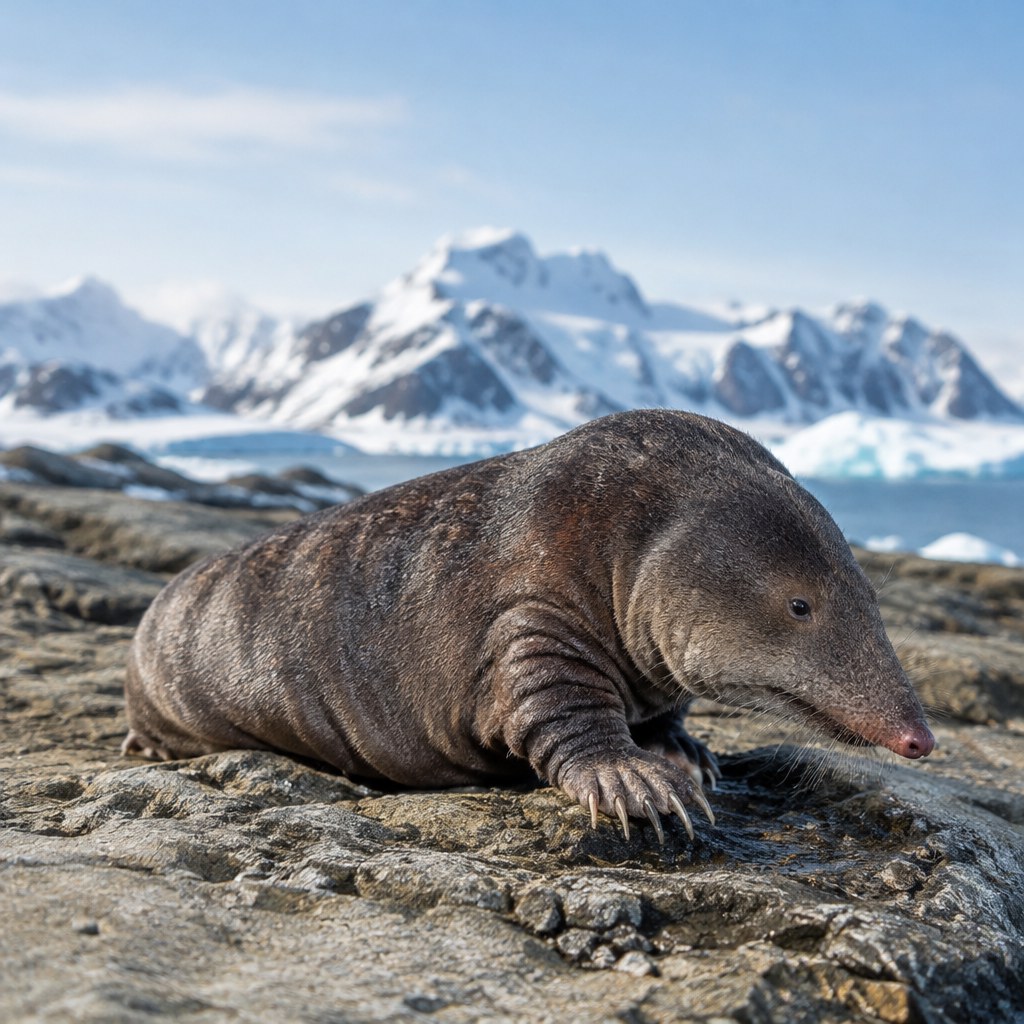
Unusual-looking animals are not mistakes or “freaks of nature.” Features that seem strange to us often help an animal find food, move through its habitat, avoid detection, or communicate. These six species are especially memorable—and the biology behind their appearance is more interesting than the myths.
1. Mata mata turtle
A mata mata’s flattened head, fringed neck, rough shell, and snorkel-like snout make it resemble bark and fallen leaves. That camouflage suits the slow-moving rivers, swamps, and marshes of northern South America where these freshwater turtles live.
Rather than chasing fish, a mata mata waits. When prey comes close, it rapidly opens its large mouth and expands its throat, drawing water and the prey inside by suction. Its long snout lets it reach the surface to breathe while much of the body remains submerged.
The name has traditionally been applied to Chelus fimbriata. Modern research has also distinguished an Orinoco mata mata, Chelus orinocensis, so older descriptions that treat every regional difference as one species may be out of date.
2. Mexican mole lizard
The Mexican mole lizard, or five-toed worm lizard (Bipes biporus), is not a hybrid of a worm, salamander, and mole. It is an amphisbaenian—a specialized group of burrowing reptiles. Unlike most amphisbaenians, it retains a pair of small but functional forelimbs.
This species is native to the Baja California Peninsula in Mexico. Its blunt head, ringed body, and strong front claws help it move through loose soil. It spends much of its life underground and is more likely to appear at the surface after rain.
Mexican mole lizards can shed part of the tail when threatened. Unlike the tails of many familiar lizards, the lost section does not regenerate, so it is an emergency defense rather than a repeatable trick.
3. Shoebill
The shoebill (Balaeniceps rex) is sometimes called a shoebill stork, but it is not a true stork. It is the only living species in the family Balaenicipitidae. Adults can stand well over a metre tall, and their broad, hooked bill is the feature that gives the bird its name.
Shoebills inhabit large freshwater wetlands in tropical eastern Africa. They often hunt by standing still, watching for fish and other aquatic prey before lunging forward. The hooked tip and sharp edges of the bill help them grip slippery prey and cut through vegetation brought up during a strike.
Remaining motionless is a hunting strategy, not evidence that the bird lacks energy or is hiding from predators. Habitat loss, disturbance, and illegal capture are among the pressures affecting wild populations.
4. Naked mole-rat
Naked mole-rats (Heterocephalus glaber) are rodents from dry parts of eastern Africa. Their nearly hairless skin, small eyes, powerful jaw muscles, and prominent incisors suit a life spent digging and navigating dark tunnel systems.
They are one of the few eusocial mammals. A colony usually has one breeding female, while other animals perform work such as digging, gathering food, defending tunnels, and caring for young. That organization is unusual for mammals, although naked mole-rats are not the only mammal with eusocial behaviour.
They are also remarkably long-lived for rodents and have attracted cancer research. However, the often-repeated claim that they are completely immune to cancer is false: rare cancers have been documented. “Cancer resistant” is not the same as “cancer proof.”
5. Wolf eel
Despite its name and long body, the wolf eel (Anarrhichthys ocellatus) is not a true eel. It is a fish in the wolffish family, with large pectoral fins behind the head. It lives in the North Pacific, generally around rocky reefs, stony bottoms, and kelp forests.
Adults use strong jaws and rounded rear teeth to crush hard-shelled prey such as crabs, sea urchins, mussels, and snails. The dramatic teeth can look intimidating, but wolf eels are generally described by aquariums as slow-moving and gentle when not threatened.
Young wolf eels spend time in more open water before settling to the bottom. Adults often occupy rocky shelters, and a male and female may form a pair and guard a mass of eggs together. They do not build a den for live birth; females lay eggs.
6. Star-nosed mole
The star-nosed mole (Condylura cristata) lives in wet soils and wetlands across parts of eastern North America. Its nose is surrounded by 22 fleshy rays packed with touch receptors. The star is a highly sensitive sensory organ, not a set of tentacles used like an octopus.
Its front feet and claws are adapted for digging, and it also swims well. Vision is limited, but calling the animal simply blind misses the point: it depends heavily on touch to locate and identify food with exceptional speed.
Research has shown that star-nosed moles can blow and re-inhale small air bubbles against underwater objects, allowing them to sample odours while submerged. That is more precise than saying they “smell underwater” in the same way they smell in air.
Why respectful language matters
Words such as ugly, creepy, and monstrous tell us about a human reaction, not an animal’s biology. Looking at function gives a better question: what problem does this feature help the animal solve? Camouflage, suction feeding, burrowing, shell-crushing teeth, and sensitive touch organs are adaptations shaped by particular environments.
Observe wild animals from a safe distance and do not handle, feed, collect, or buy them without checking wildlife laws and welfare requirements. A species that looks unusual can still be vulnerable to habitat loss, disturbance, or the wildlife trade.
Sources
- University of Michigan Animal Diversity Web: Mata mata
- University of Michigan Animal Diversity Web: Five-toed worm lizard
- University of Michigan Animal Diversity Web: Shoebill
- Smithsonian’s National Zoo: Naked mole-rat
- Aquarium of the Pacific: Wolf eel
- University of Michigan Animal Diversity Web: Star-nosed mole